A class ring is a strange purchase. It is chosen at seventeen, worn hardest between eighteen and twenty-two, and then kept for decades. The students who still wear theirs at thirty tend to have made the same few decisions.
Start with the metal, because it decides the budget
Metal is the largest single factor in what a ring costs and how it ages.
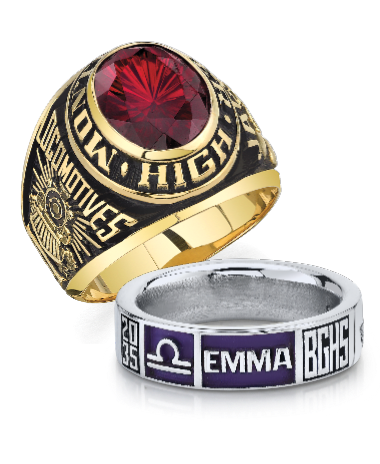
- Precious metals — gold in its various karats and white gold — are the traditional choice. Heavier, warmer, and they hold detail beautifully. They are also the top of the price range.
- Alternative metals are engineered specifically for rings that get worn every day. Considerably more scratch-resistant than gold, notably lighter on the hand, and a fraction of the cost.
There is no wrong answer here. There is a wrong process: choosing a metal because it was the default on the order form, without ever handling both.
The stone is the part people notice
Two things to decide: color and cut.
Color is usually the school color, a birthstone, or simply the color the student likes. School colors photograph well and read instantly. Birthstones age slightly better as a personal object rather than a school one.
Cut changes the character more than students expect. A faceted stone throws light and looks lively. A smooth, domed cut is quieter and considerably more subtle on a hand. If a student is unsure whether they want to be wearing something eye-catching in a job interview in five years, the domed cut is the safer choice.
Side panels: the part that actually dates the ring
The two sides of the ring are where personalization lives — sport, activity, instrument, mascot, graduation year, name.
This is where regret concentrates. The reliable filter is a single question:
Will this still be true about me in ten years?
Graduation year, school name and mascot stay true forever. A sport played for four years stays true. A team from a single season, a relationship, a nickname from junior year — those age unevenly. It is not that they are wrong. It is that they are specific to a moment, and the ring outlives the moment.
Get the size right, in person
Ring sizing is the one part of this that cannot be done well over the internet.
- Fingers change size through the day and across the year. They are smallest in the cold morning and largest in the heat and after exercise.
- A class ring is wider than most rings, and a wide band fits tighter than a narrow one at the same nominal size.
- The ring has to clear the knuckle and then sit without spinning.
Most schools host a sizing day and we bring proper sizers. If a student misses it, contact us and we will arrange it — this is worth twenty minutes.
Inside engraving
Nearly free, permanently invisible to everyone but the wearer, and the detail people report caring most about later. Initials, a date, a short line from a parent. Ask about the character limit before writing the message.
The honest summary
Buy for the person, not the yearbook. Metal you will actually wear daily, a stone you will not tire of, side panels that will still be true in a decade, and a size taken properly in person.
Sizing days run through the fall at schools across Southeast Michigan. Email info@hjdetroit.com or call (734) 725-5743 and we will tell you when we are at your school.